

What does it really take to get Connect to Work off the ground and delivering impact quickly?
Working with West London Alliance (WLA), we’ve been leading the way with the first Connect to Work programme to launch. We’re now six months in, and we’re already proving what’s possible with hundreds of people (and counting) joining the programme. This means more people starting and staying in work, improving their wellbeing and earning.
As the UK’s largest IPS provider outside the NHS, we know what it takes to deliver supported employment at scale. With WLA, we’ve learnt lessons that commissioners will want to know as they roll out Connect to Work.
1. Integration is a game-changer
WLA’s support offer is broad. Adding more layers of support into the local system wasn’t going to work. Instead, from day one, we focused on joining up existing services and breaking down any remaining silos.
Here’s how we did it:
- Co-locating in the community: worked with local partners, including the NHS, to identify the best co-location spots. We quickly established ourselves in GPs, housing associations, Jobcentre Plus, and local authorities.
- Data-sharing: set up agreements quickly so referrals and co-location worked seamlessly across services.
- Complementing services: mapped existing provision and brought local partners into the service delivery to fill any gaps.
2. Build a pipeline at pace
Through data, process and service integration, our teams rapidly built a solid pipeline of participants. A fast and clear referral pathway keeps participants engaged and onto the service that gives them the best chance of getting work.
Here’s how we did it:
- Triage system: created a central, coordinated process linked directly to existing services, allowing us to manage a high volume of referrals with delays minimised.
- Programme pathways: established a designated route for Work Well participants into Connect to Work.
- Referred to other programmes: connected people to local services such as Work Well, MSK Trailblazer, IPS Drugs & Alcohol and IPS for severe mental illness to make sure they got the most appropriate support.
Impact
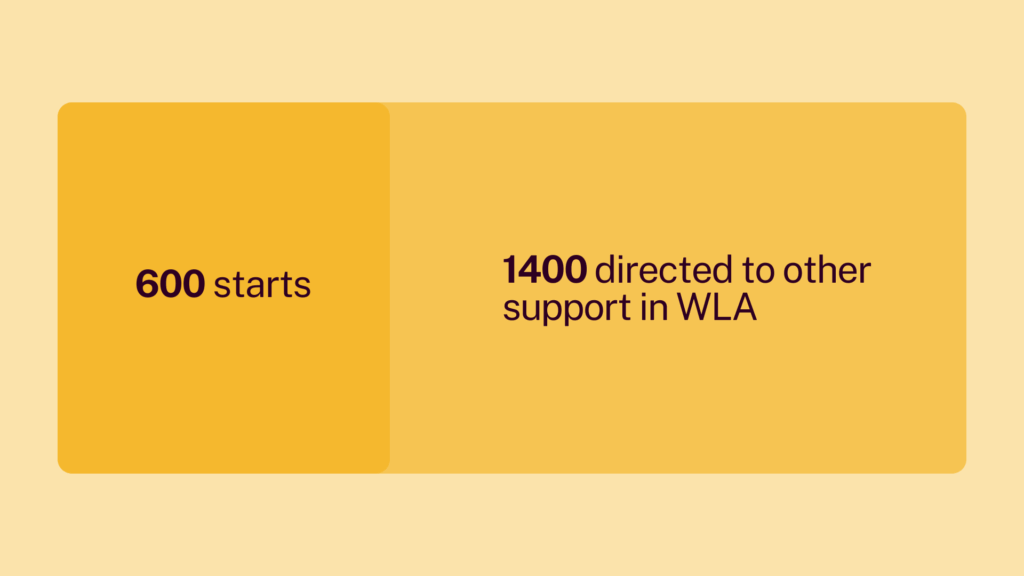
In six months, we’ve triaged nearly 2,000 people with over 600 starting the programme (exceeding our targets) and 1400 directed to other support in WLA. One-fifth of these participants benefited from our Support Employment Quality Framework (SEQF), and 1 in 6 were people in a job who needed help to keep it. We already have over 4,500 interventions with participants in the book, helping them access complementary services and boost their confidence for work.
3. Local people, local employers, local partners
A great service needs local job opportunities. We built relationships with a wide range of local employers to reduce the time it takes to get people into work. Here’s how we did it:
- Getting to know our neighbours: instead of asking busy employers to come to us, we met them in their workplaces to understand their needs.
- Multiple ways to connect: from a dedicated webpage to register their interest, to ‘learning lunches’ to showcase participants, we made it easy for employers to engage.
- Smarter employer tracking: we co-ordinated engagement centrally so no employer felt overwhelmed, and ensuring consistent, well-managed partnerships with local businesses.
Impact
Just six months after launch, we’ve supported over 40 people into work and more success is on the way. We’ve shown speed – placing some participants into roles within weeks; our partnership with a local education recruitment agency helped a participant find work within seven days.
We’re excited to replicate this success with Sheffield, where we’re working with the South Yorkshire Mayoral Combined Authority to launch their Connect to Work.
To understand how we can support you with Connect to Work delivery in your area visit Commissioning Connect to Work or email partnerships@shaw-trust.org.uk
To find out more about our IPS delivery visit Individual Placement and Support (IPS) Impact Report